In modern networking environments, choosing the right type of cabling is essential for performance, reliability, and cost efficiency. Whether you’re building a data center, upgrading your infrastructure, or optimizing server connectivity, understanding the differences between DAC, AOC, and fiber optic solutions is key.
In this guide, we’ll explain what each technology is, how they work, and when you should use them.
What is DAC (Direct Attach Cable)?
A Direct Attach Cable (DAC) is a copper-based cable with integrated transceivers on both ends. These cables typically use SFP, SFP+, QSFP, or QSFP-DD connectors and are designed for short-distance connections.
Key Characteristics:
- Made of twinax copper
- Integrated transceivers
- Low latency and low power consumption
- Cost effective for short distances
- Typically support distances up to 5-10 meters
- Up to 800G with QSFP-DD connector
Use Cases:
DAC cables are ideal for:
- Connecting devices within the same rack
- Top-of-rack (ToR) networking
- High-speed, short-distance interconnects
What is AOC (Active Optical Cable)?
An Active Optical Cable (AOC) uses fiber optics internally but comes as a complete cable assembly with built-in transceivers on both ends, similar to DAC.
Key Characteristics:
- Uses fiber instead of copper
- Integrated transceivers
- Lightweight and flexible
- Lower signal loss over longer distances compared to DAC
- Supports distances from a few meters up to 100 meters or more
- Up to 800G with QSFP-DD connector
Use Cases:
AOCs are suitable for:
- Medium-range connections within data centers
- Inter-rack connectivity
- Environments where electromagnetic interference (EMI) is a concern
What is Fiber Optic Cabling?
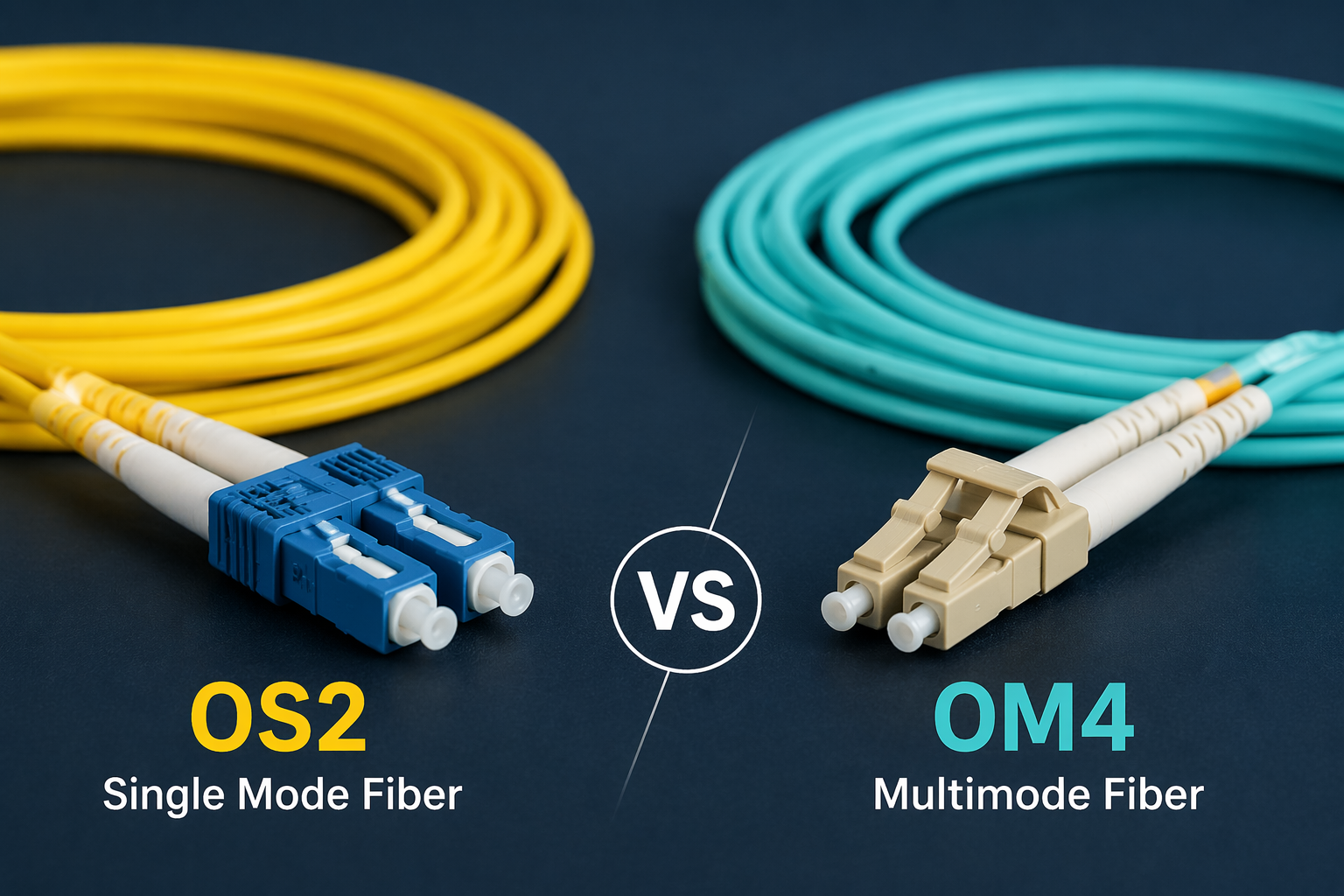
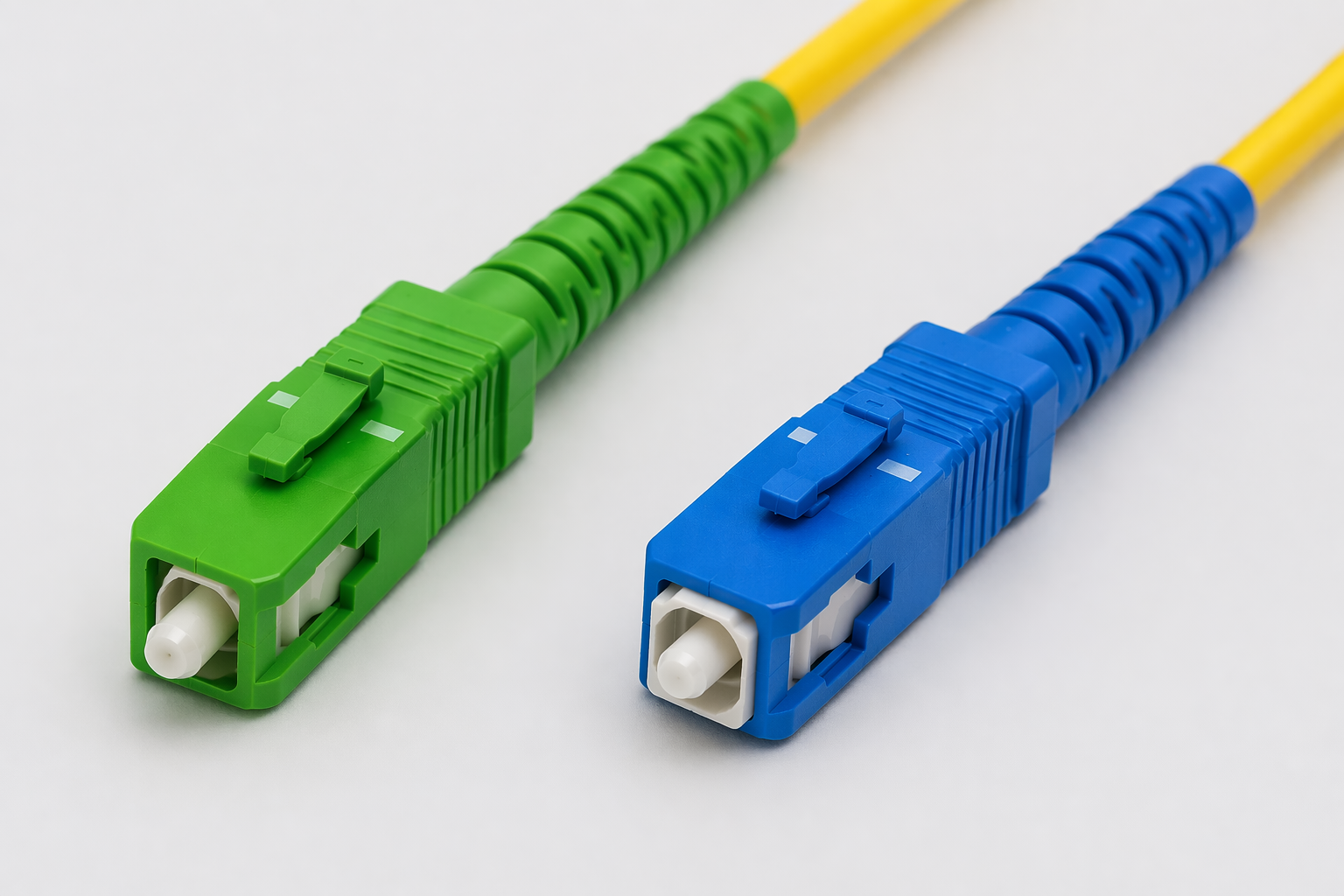
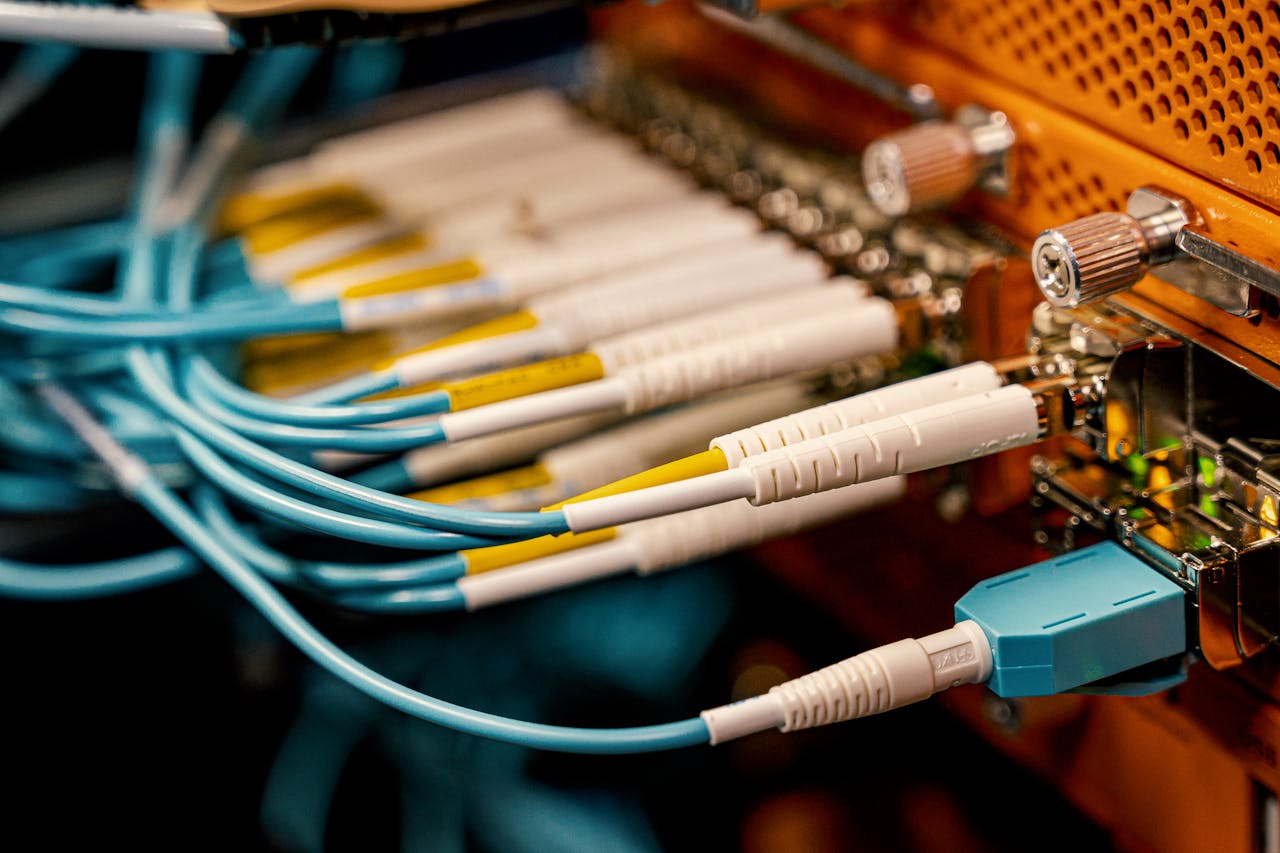
Fiber optic cabling uses light signals to transmit data over glass or plastic fibers. Unlike DAC and AOC, fiber solutions are modular: you use separate transceivers (such as SFP, SFP+, QSFP, etc.) and fiber cables (LC, MPO, etc.).
Key Characteristics:
- Extremely high bandwidth and long-distance capability
- Modular and highly flexible
- Supports distances from tens of meters to several kilometers
- Environments where electromagnetic interference (EMI) is a concern
- Up to 800G with QSFP-DD connector
Use Cases:
Fiber optics are ideal for:
- Long-distance connections (e.g., between buildings, racks or data halls)
- High-performance backbone networks
- Scalable and future-proof infrastructure
When Should You Use DAC, AOC, or Fiber?
1. Distance
- 0–5 meters → DAC (most cost-effective)
- 5–100 meters → AOC (better performance over longer distances)
- 100+ meters to kilometers → Fiber
2. Budget
- Lowest cost → DAC
- Mid-range → AOC
- Higher upfront cost but scalable → Fiber
3. Flexibility & Scalability
- Low flexibility → DAC and AOC (fixed cables)
- High flexibility → Fiber (modular components)
4. Power Consumption
- Lowest → DAC
- Moderate → AOC
- Varies (depending on optics) → Fiber
Conclusion
There is no one-size-fits-all solution when it comes to network connectivity. Each technology has its strengths:
- DAC is the best choice for short, cost-sensitive connections within racks.
- AOC provides a balance between performance and distance for medium-range connections.
- Fiber offers unmatched flexibility, scalability, and long-distance performance.
For businesses building or upgrading their infrastructure, the right choice depends on your specific needs in terms of distance, budget, and future scalability.
At VHFiber, we provide a full range of DAC cables, AOCs, fiber optic cables, and compatible transceivers to ensure your network performs at its best—today and in the future.