Fiber optic connectivity is a core part of modern IT infrastructure, yet some of the smaller details can still cause confusion. One of the most common questions is the difference between APC and UPC fiber connectors. At first glance, they may look similar, but their performance and use cases are quite different.
Understanding how APC and UPC connectors work, and when to use each, can help prevent signal issues, compatibility problems, and unnecessary troubleshooting.
What are APC and UPC fiber connectors?
APC and UPC refer to the way the end face of a fiber connector is polished. This polishing affects how light signals behave when they pass through the connection.
UPC stands for Ultra Physical Contact. These connectors have a flat, polished end face that allows fibers to connect directly with minimal air gap.
APC stands for Angled Physical Contact. These connectors are polished at an angle, typically 8 degrees, which changes how reflected light behaves at the connection point.
This difference in polish has a direct impact on signal reflection, which is one of the key performance considerations in fiber networks.
Why the difference matters
When light travels through a fiber connection, a small portion of it is reflected back toward the source. This is known as back reflection or return loss. In many applications, especially over longer distances or in high-frequency environments, excessive reflection can degrade signal quality.
APC connectors are designed to minimize this reflection by deflecting the reflected light away from the fiber core. UPC connectors, while still effective, reflect more light back toward the source because of their flat surface.
For many standard IT applications, this difference may not cause immediate issues. However, in more sensitive environments, it can significantly impact performance.
How to recognize APC vs UPC connectors
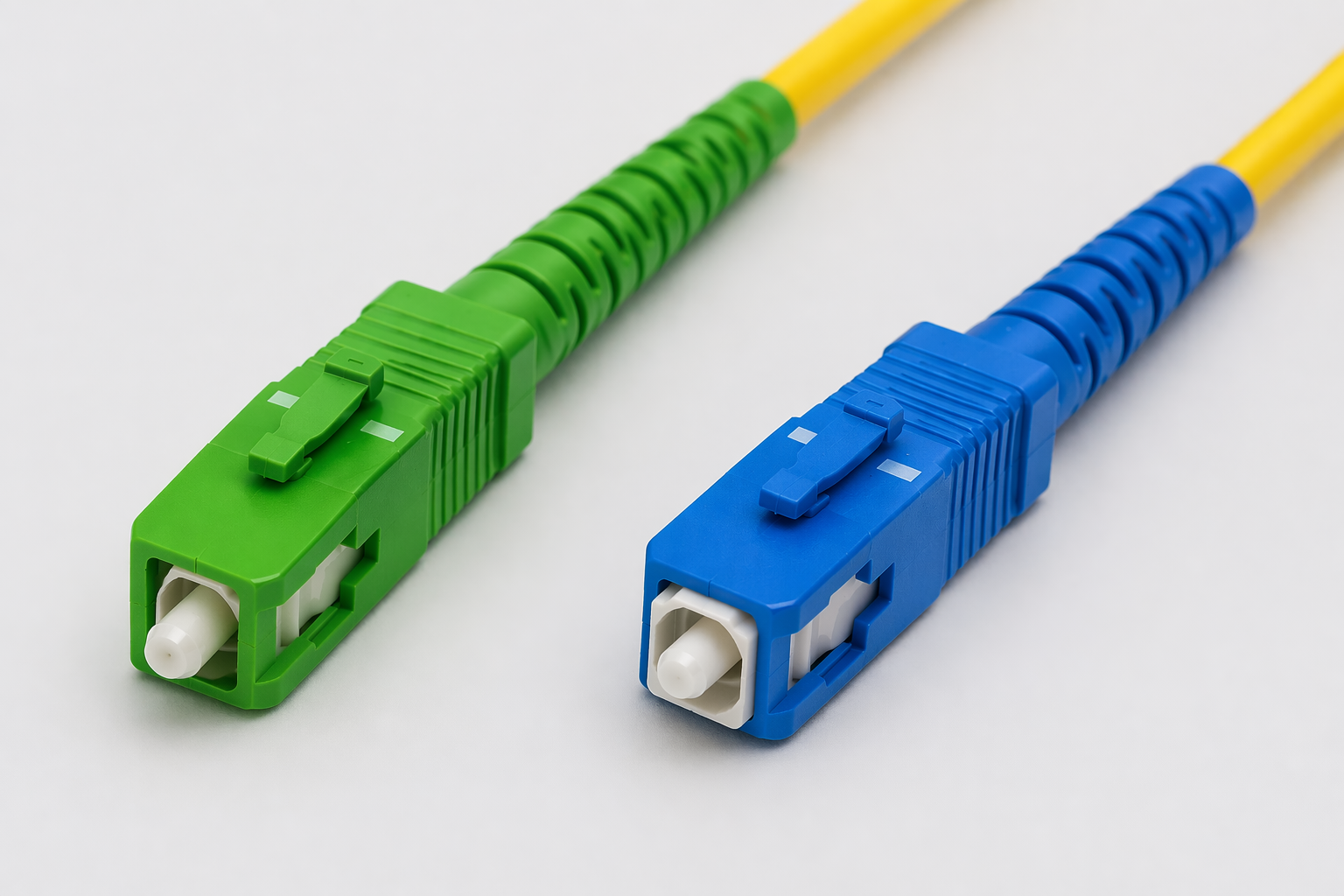
In most cases, identifying the connector type is straightforward. The easiest way is by color. APC connectors are almost always green, while UPC connectors are typically blue. This color coding is widely used across the industry and is a quick visual indicator
Another way is by inspecting the connector end face. APC connectors have a visibly angled tip, while UPC connectors appear flat. However, this is harder to see without proper tools or experience, so color coding is usually the most reliable method in the field.
It is important to avoid mixing the two types. Connecting an APC connector to a UPC port can lead to poor performance and even physical damage to the connector end face.
Where you typically find each type
UPC connectors are the most common in general IT environments. You will often see them in:
- Data centers
- Enterprise networks
- Patch panels and standard fiber links
They are widely used because they provide good performance for most applications and are compatible with a broad range of equipment.
APC connectors are more commonly used in applications where signal reflection must be minimized. These include:
- FTTH (fiber to the home) networks
- CATV and RF-based systems
- Passive optical networks (PON)
In these environments, even small amounts of reflection can interfere with signal quality, making APC the preferred choice.
When to use APC vs UPC
Choosing between APC and UPC depends on the requirements of your application.
UPC is typically the right choice for standard data networking. If you are working in a data center or enterprise environment and do not have strict reflection requirements, UPC connectors are usually sufficient and more commonly supported.
APC should be used when minimizing back reflection is critical. This is especially important in long-distance transmission, RF video signals, and PON networks.
A good rule of thumb is to follow the specification of your equipment. Many devices are designed specifically for either APC or UPC connectors, and using the wrong type can lead to performance issues.
A quick comparison
| Feature | UPC Connector | APC Connector |
|---|---|---|
| End face polish | Flat | Angled (8°) |
| Return loss | ~ -50 dB | ~ -60 dB |
| Color | Blue | Green |
| Back reflection | Moderate | Very low |
| Common use cases | Data networks | FTTH, CATV, PON |
This table highlights the core differences and can be a useful reference when selecting components.
FAQ: APC vs UPC fiber connectors\
Q: Can I connect APC to UPC connectors?
A: No, this is not recommended. While they may physically fit, the mismatch in polish can cause high signal loss and potential damage to the connectors.
Q: Should I always use APC instead of UPC connectors?
A: Not necessarily. APC provides better return loss, but it is only needed in specific applications. For most standard IT environments, UPC is more than sufficient. Furthermore, APC is more expensive.
Q: How do I know which connector I need?
Check your equipment specifications. Many devices are designed specifically for either APC or UPC connectors, and using the correct type ensures optimal performance.
Q: Where are APC connectors most commonly used?
A: They are widely used in FTTH and PON networks, as well as in CATV systems where low reflection is critical.
Q: Is APC available for multimode fiber cables?
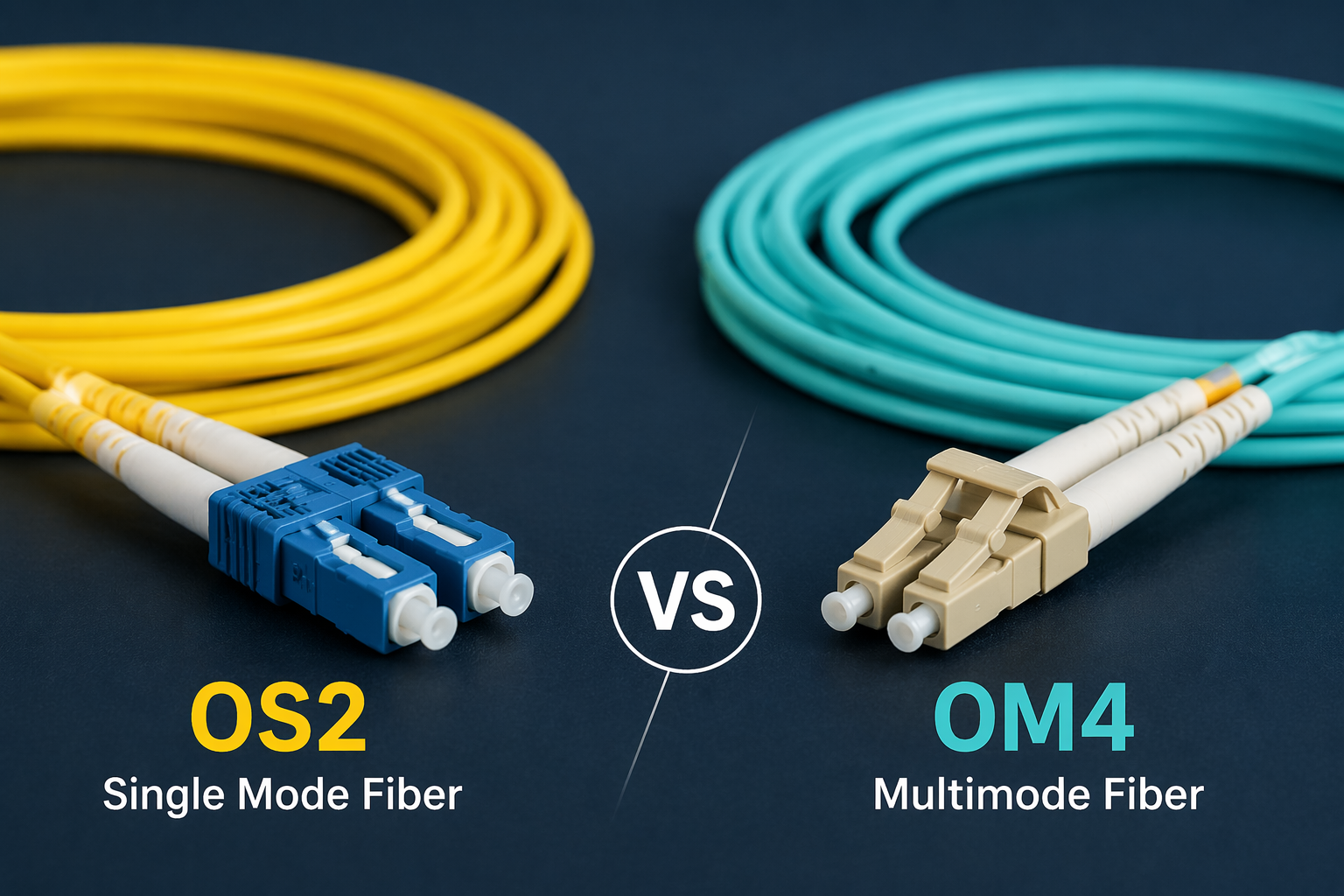
A: No, APC connectors are generally not used with multimode fiber. APC polishing is designed to minimize back reflection, which is especially important in single-mode applications such as long-distance transmission, FTTH, and PON networks. Multimode fiber systems operate over shorter distances and are less sensitive to back reflection, so UPC connectors are the standard choice. As a result, APC connectors are almost exclusively found in single-mode fiber environments and are not typically available for multimode cables.
Final thoughts
APC and UPC connectors may seem like a small detail within a fiber network, but they play an important role in performance. By understanding the differences in polishing, reflection, and application, you can make better decisions when selecting components and avoid common compatibility issues.
In most IT environments, UPC will be the standard choice, while APC is essential for more specialized, reflection-sensitive applications. Knowing when and where to use each ensures a more reliable and efficient network.